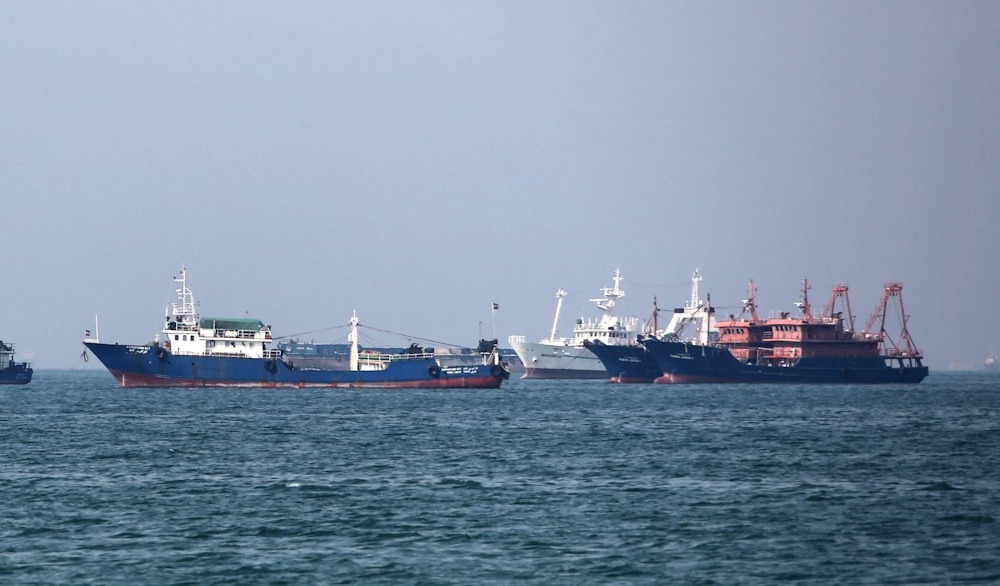
Following the largest attacks on shipping by Iran and the United States since the start of their six-month dispute, oil prices stayed high on Thursday after Brent crude surpassed $100 per barrel as markets evaluated the possibility of a more significant disruption in supply. Iran announced on Wednesday that it had targeted 10 vessels in proximity to the Strait of Hormuz, following the United States’ sinking of five Iranian oil tankers. The Islamic Revolutionary Guard Corps issued a warning that it would escalate its response should additional attacks occur. Brent crude futures experienced an increase of 0.2%, reaching $101.80 per barrel, whereas U.S. West Texas Intermediate crude saw a rise of 0.5%, settling at $96.55 per barrel. Front-month Brent crude futures concluded the previous session at $101.21 a barrel, marking an increase of $3.29, or 3.4%, after reaching a peak of $101.58.
U.S. West Texas Intermediate crude increased by $3.02, representing a 3.25% rise, concluding the session at $96.05 per barrel. Both benchmarks concluded at their peak levels since May 22. Traffic through the Strait of Hormuz continues to be significantly lower than levels observed prior to the conflict. Prior to the onset of hostilities, the critical waterway was responsible for transporting approximately one-fifth of the global oil and gas supplies. The U.S. Energy Information Administration raised its oil price forecasts for this year and next on Wednesday, citing falling global stockpiles as Middle Eastern supply remains disrupted. Tim Waterer told that the latest price moves reflected a combination of physical supply tightness and a geopolitical risk premium. “Right now the risk premium is doing a lot of the heavy lifting,” he told. Waterer expects oil prices to stay elevated for as long as the Strait of Hormuz remains contested and diplomatic efforts remain fragile.
The risks to oil prices are becoming increasingly asymmetric, with the likelihood of additional disruptions on the rise. Daan Struyven, co-head of global commodities research at Goldman Sachs, stated that the recent attacks suggest a potential for shipping disruptions to expand and escalate. Goldman Sachs has delineated a scenario in which oil prices could ascend to as high as $120 a barrel should assaults on Middle Eastern vessels intensify. If exports return to normal, the bank anticipates that oil prices will decline to approximately $80 a barrel. Struyven indicated that the risks associated with shipping have emerged as a significant determinant for oil prices. Struyven indicated that Goldman Sachs anticipates “meaningful upside to crude oil prices” and also projects an increase in natural gas and refined product prices. He stated that supply shocks in petrol and fuels are more significant than those observed in the crude market. The duration of the disruption will be a critical determinant for oil prices.
JPMorgan estimates that each additional month of disruption could add approximately $7 to $8 per barrel to Brent prices. If the disruption persists for three months, the bank anticipates average monthly Brent prices to approximate $114 per barrel. Citi has increased its average Brent crude price forecast for the third quarter to $86 a barrel, up from $80, attributing this adjustment to a longer-than-anticipated timeline for the reopening of the Strait of Hormuz. ANZ analysts have revised their short-term Brent forecast upward to $95 a barrel, cautioning that prices may increase further should the conflict in the Middle East intensify. It was indicated that a prolonged standoff characterised by measured military engagement between the United States and Iran seems to be the most probable outcome, which could postpone the complete restoration of Middle Eastern supply.