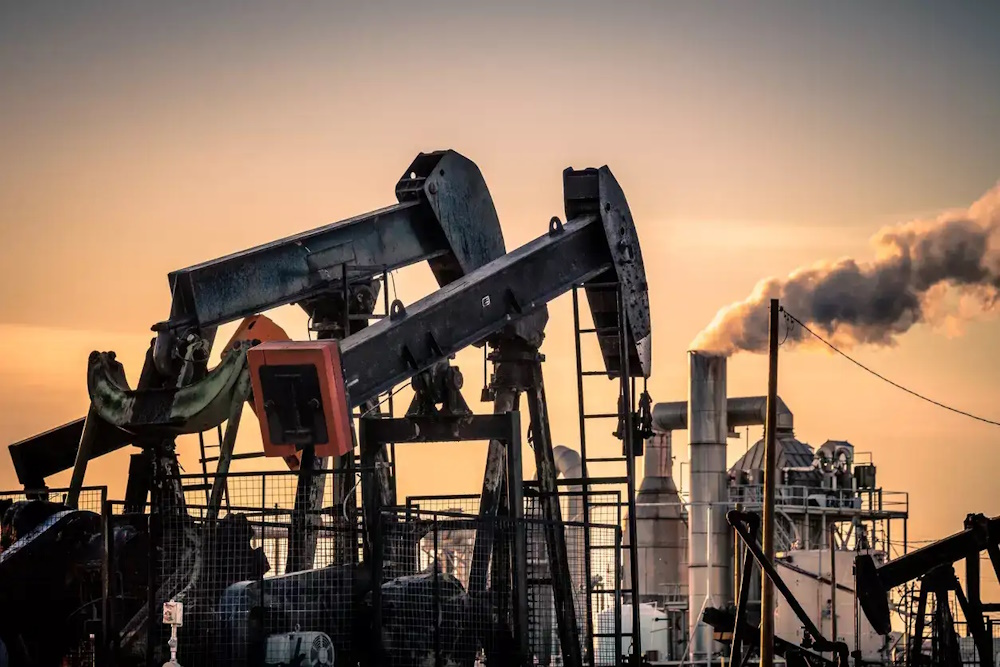
Oil prices surged past $91 per barrel in early trading on Tuesday, as optimism for a resolution to the conflict in the Middle East waned. Iran announced a shift toward a more aggressive posture, while the United States dismissed the possibility of extending a ceasefire agreement, heightening concerns regarding energy supply. Brent crude futures increased by 39 cents, representing a 0.4% rise, reaching $91.26. Meanwhile, US West Texas Intermediate crude futures surged by 51 cents to $85.31 a barrel, continuing their upward trajectory. Both benchmarks experienced an increase exceeding 5% last week following assaults on tankers managed by Abu Dhabi National Oil Company in the Strait of Hormuz, along with an attack on a Saudi Aramco refinery.
Iran is set to adopt a “fully offensive” military stance, as negotiations aimed at achieving a permanent resolution to the conflict with the US have reached an impasse, according to a senior Iranian official. This development comes as Washington has dismissed the possibility of prolonging a temporary ceasefire agreement. Hopes for peace talks and expectations regarding the resumption of oil tanker traffic through the strategically significant Strait of Hormuz have diminished significantly, as involved parties indicate a willingness to prolong the conflict initiated by the US and Israel with their attacks on Iran on February 28. Iran has been engaged in negotiations regarding an agreement for managing the strait with Oman and asserts that they are nearing a deal. US President Donald Trump reacted to these negotiations by issuing a threat to bomb the Gulf state, which has been a longstanding security partner of the United States.
However, in what appears to be the only ray of hope, media reports claimed that Trump had opened back-channel discussions with the Islamic Revolutionary Guard Corps. “Oil has jumped to start the week as U.S.-Iran relations look increasingly shaky. A deal to reopen the Strait of Hormuz still does not appear to be in sight, and shipping numbers remain at a trickle,” analyst at said. “The dual chokehold on the Strait of Hormuz and the Bab el-Mandeb remains highly significant. These are not secondary concerns. They sit at the centre of the current supply-risk narrative,” KCM’s Waterer added. JPMorgan projected that each extra month of disruption might contribute approximately $7 to $8 per barrel to Brent prices. If the disruption persists for three months, the bank anticipates average monthly Brent prices to approximate $114 per barrel.
Goldman Sachs has issued a cautionary note indicating that Brent may escalate to $120 a barrel should shipping disruptions persist through the Strait of Hormuz, which is recognised as the most critical oil transit route globally. Goldman Sachs anticipates that tensions in the Middle East will ultimately subside in accordance with its base case scenario. The Wall Street bank anticipates that Brent will average $80 per barrel in the fourth quarter and $75 per barrel in the following year. It stated that risks remained skewed toward the upside, as disruptions through the Strait of Hormuz and the Red Sea could endure for a longer duration than anticipated.