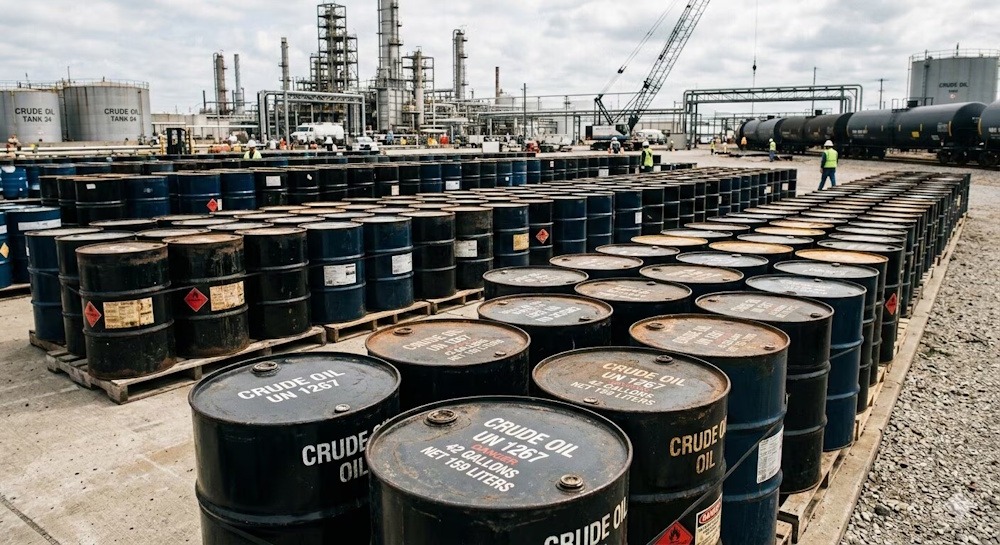
Oil prices increased by more than one percent on Wednesday following an attack on an administrative building associated with Saudi Arabia’s state-owned oil company, Saudi Aramco, located in the eastern city of Dhahran. The Energy Ministry reported that the incident resulted in a limited fire. Markets assessed the potential for supply disruptions stemming from the conflict between the Houthis and Saudi Arabia, juxtaposed with the likelihood of heightened diesel supplies from Russia. Brent crude futures increased by $1.40, representing a rise of 1.35%, reaching $107.35 per barrel. Meanwhile, US West Texas Intermediate crude futures saw an uptick of $1.24, or 1.32%, settling at $95.38. Brent experienced a decline of 0.9% on Tuesday, whereas WTI saw an increase of 0.4%. The Dhahran complex serves as a significant operations center for Aramco, overseeing a vast network of onshore and offshore oil rigs, pipelines, refineries, and export terminals.
Over the past week, the Houthis have initiated a series of ballistic missile and drone strikes targeting critical Saudi installations, a direct response to the kingdom’s backing of government forces amidst the resurgence of Yemen’s civil conflict. Riyadh’s international airport has experienced four attacks, the most recent occurring on Saturday, resulting in the deaths of 13 individuals. The development gains significance as Saudi Arabia increased oil production last month despite disruptions to shipments caused by the US-Iran conflict. This contributed to a sharp rise in production from OPEC+, the Organization of the Petroleum Exporting Countries and its partners, including Russia, said on Tuesday. OPEC has adjusted its oil demand forecast for 2027, highlighting the necessity to replenish inventories. Iran is employing new strategies to target vessels in the Strait of Hormuz, aiming to sustain elevated oil prices and exert influence over the US midterm elections, as reported by Reuters, referencing two senior Iranian officials.
The assault on the headquarters of Saudi Arabia’s national oil company followed a warning from the Houthis for all employees and civilians in proximity to the kingdom’s oil facilities to evacuate on Tuesday, characterising the locations as a “legitimate target”. Shortly after the order, Al Jazeera’s team on the ground reported the occurrence of explosions in Sanaa. Media outlets associated with the Houthis reported that forces supported by Saudi Arabia conducted air strikes on an oil facility located in the al-Sabah region. Uncertainty regarding the ultimate resolution of the conflict continues to be a significant worry for market participants. JPMorgan analysts indicated that they could not accurately predict the eventual trajectory of the war. When the conflict began, the bank had assumed the US administration would refrain from crossing specific economic thresholds. Seven months into the conflict, numerous thresholds have been surpassed, yet a definitive exit strategy remains elusive.
The escalating risk of additional supply disruptions has correspondingly heightened the likelihood of elevated oil prices. Daan Struyven, co-head of global commodities research at Goldman Sachs, noted that recent attacks demonstrated the potential for disruptions to shipping to proliferate and escalate. Goldman Sachs has delineated a scenario wherein oil prices might ascend to $120 per barrel should assaults on vessels in the Middle East intensify. If exports return to normal, the bank anticipates that prices will revert to approximately $80 a barrel. Struyven noted that risks to shipping have emerged as a significant factor influencing oil prices. Goldman Sachs anticipates considerable upside potential for crude oil and also projects an increase in prices for natural gas and refined products. Struyven noted that the supply shocks impacting petrol and fuels were more significant than those observed in the crude oil market.