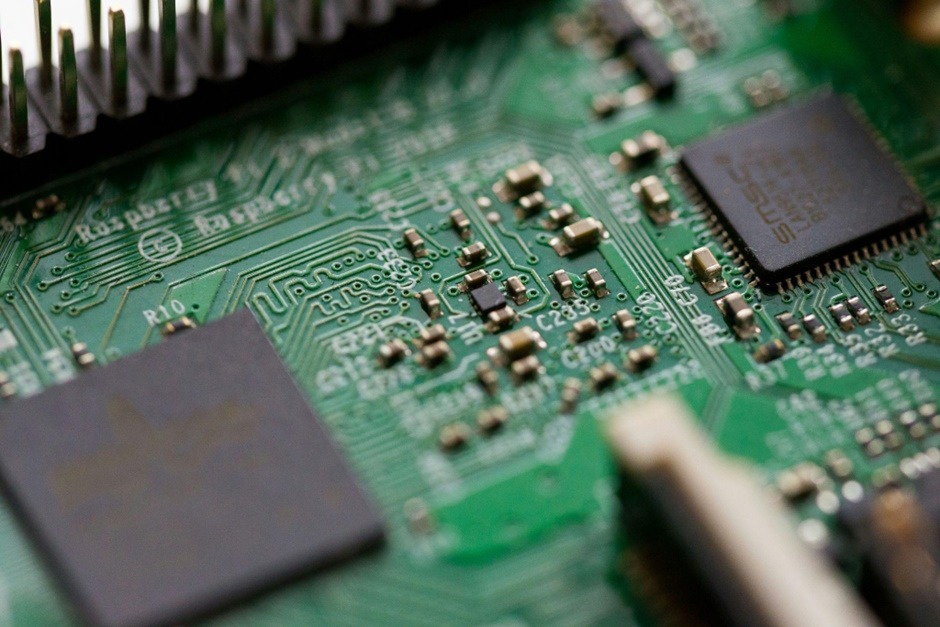
Silicon has represented the mainstay of the microchip manufacturing sector for decades. Not only is this material (essentially a form of purified sand) one of the most abundant resources on the face of the earth, but it is an extremely cost-effective solution. However, silicon suffers from a number of possible drawbacks. Technological innovations have likewise presented a number of interesting alternatives. Why might silicon be on its way out, and what other chemicals are beginning to take centre stage?
The Issues with Silicon
Without delving into extremely technical terminology, the key drawback of silicon is that it cannot be scaled down to accommodate the diminishing sizes of transistors. This can be thought of as an Achilles heel, as transistor dimensions ultimately determine the speeds at which a microchip can process information. We are quickly approaching the point where efficiency will begin to be sacrificed if an alternative is not found. Other variables such as heat dissipation, and voltage transmission have also raised concerns. So, what might the future have in store?
Carbon Nanotubes (CNTs)
Believe it or not, this organic substance has made significant headway in recent times. Nanotubes are known for their extreme strength; even higher than steel. Furthermore, they are able to support smaller transistors. Why are these two factors so important?
Imagine that you wish to play the latest video poker games on your smartphone. These games require a significant amount of processing power; especially when referring to wireless streaming connectivity. The same holds true for other immersive variants including slots, roulette, baccarat, and crash titles. When it comes to the need for speed, gamers should be looking favourably on the potential of carbon nanotubes.
Not only can smaller transistors accommodate for such a high demand, but the size of the nanotubes will decrease the footprint of the microchip itself. This may ultimately lead to lighter mobile devices, thinner dimensions, and longer battery lifespans between charges.
Diamond
They say that “a diamond is forever”, and this statement can also be applied to the microchip sector. Diamonds are excellent at dissipating heat; ensuring a long lifespan. Additionally, diamonds can be placed within devices required to function in harsh environments (such as areas known for high levels of ultraviolet radiation). This is why certain sectors, such as the aviation industry, have begun to take notice.
Gallium Nitride (GaN)
Gallium nitride has often been referred to as a “third-generation” material that can be used in the manufacture of microchips. This substance offers more power density than silicon, it is extremely efficient, and it boasts an impressive level of thermal conductivity (heat will eventually degrade the components found within a microchip, so dissipating this heat is crucial).
However, we still need to remember that (at least for now) silicon is the most economically viable material. As manufacturing processes continue to break new ground, it will be interesting to see if the substances highlighted above usher in an entirely new generation of processing power.