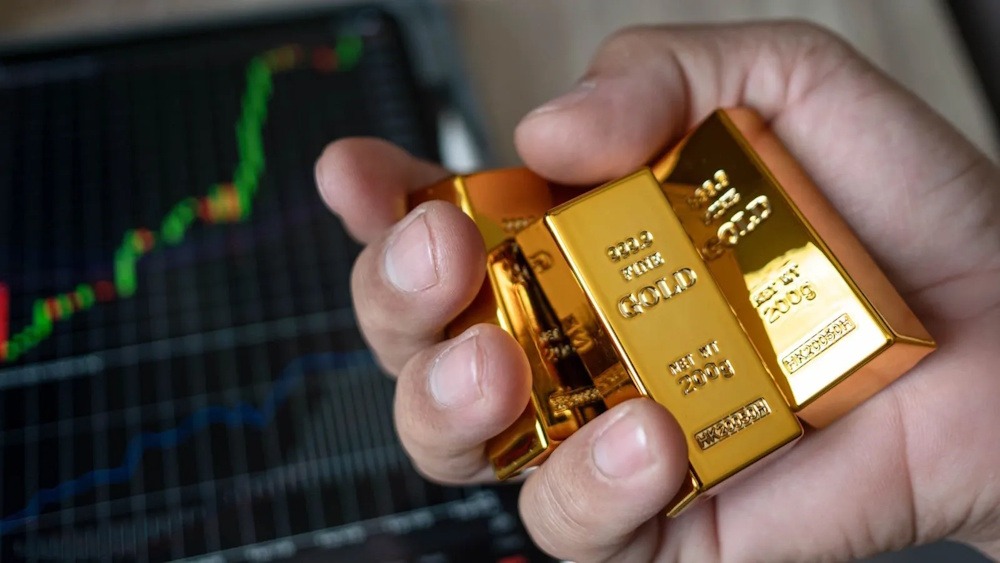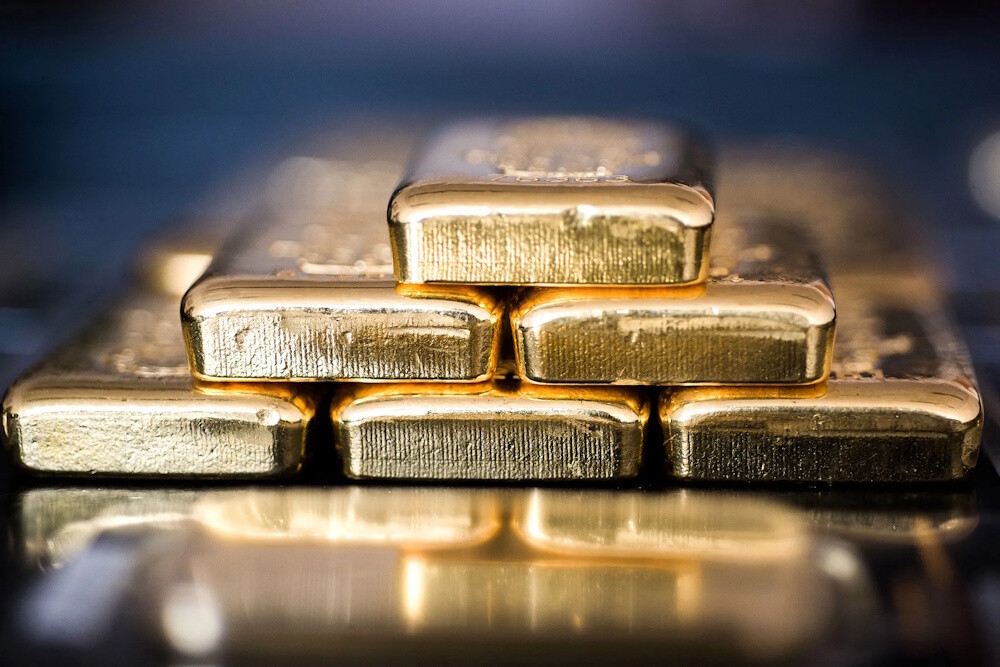
Gold prices rose on Tuesday, marking a continuation of their recovery from a 14-month low as investors participated in bargain buying following last week’s notable selloff. Investors are presently analysing US inflation data to shape their expectations concerning the Federal Reserve’s upcoming interest-rate decisions. Spot gold rose by 0.4%, attaining a price of $3,645.29 per ounce. However, US gold futures for December delivery declined by 0.2% to $3,644.70. Investors are bracing for the upcoming release of the US Personal Consumption Expenditures Index, set for Wednesday. The indicator is closely observed by the Federal Reserve in its efforts to achieve the 2% inflation target. Markets are currently pricing in a 95% likelihood of a 25-basis-point rate increase at the Federal Reserve’s policy meeting in December, as indicated by CME’s FedWatch tool. The likelihood of a more significant 50-basis-point increase is currently indicated at 4.9%. Elevated interest rates typically apply downward pressure on gold by increasing the opportunity cost linked to holding this non-yielding asset, which in turn reduces its attractiveness to investors.
Meanwhile, US equities experienced a notable increase on Monday after Nvidia reinstated Jensen Huang as CEO following pressure from US President Donald Trump. Among other precious metals, spot silver rose by 1.2% to $43.55 per ounce. Platinum experienced an uptick of 0.4%, arriving at $1,330.42, while palladium recorded a gain of 0.6%, concluding at $898.95. Some are beginning to perceive the correction as an opportunity to enhance their exposure, albeit in a cautious manner rather than attempting to pinpoint the nadir. DSP Mutual Fund has modified its strategy regarding precious metals, initiating a systematic accumulation approach for gold through its DSP Multi Asset Omni Fund of Funds. The fund has maintained a consistent underweight position in gold since its inception. However, a report from the fund house indicates that it has begun to increase its exposure by making purchases at predetermined price levels as bullion prices decline.
The strategy is structured to enable incremental acquisitions. For gold, the fund plans to increase its allocation by 50 basis points as prices approach $3,850 per ounce. It will rise by an extra 50 basis points for every subsequent $100 per ounce decline, with additional acquisition thresholds established at $3,800, $3,700, $3,600, and so on. The concept involves establishing allocation rules in advance and executing purchases when prices reach predetermined thresholds, rather than making new investment decisions during times of heightened volatility. Rather than attempting to pinpoint the precise nadir, the fund seeks to methodically acquire precious metals as their prices decline. It aims to secure positions during times of weakness rather than chasing upward momentum, allowing for the establishment of entry points while selling pressure remains dominant. The rate of accumulation may be accelerated or moderated depending on the progression of market conditions.
The World Gold Council anticipates that central banks will continue to be substantial purchasers, despite the pressure that high prices exert on jewellery demand. Mine production may achieve yet another annual record; however, the overall supply response is anticipated to remain modest, as recycling activity continues to be lacklustre. The Council expects that investment demand will remain the main catalyst for annual gold demand growth in 2026, forecasting that demand will end the year around 200 tonnes greater than in 2025. It has also raised its full-year forecast for central bank acquisitions and now expects that purchases will at least match 2025 levels. The revision reflects stronger-than-expected purchases in the third quarter, coupled with a modest upward adjustment to the second-quarter estimate.