Oil prices experienced a slight decline on Friday; however, they are poised for significant weekly gains as tensions between the United States and Iran persist, maintaining a state of unease in the markets. While prices eased in early trade, the broader focus remained on escalating geopolitical tensions that have disrupted energy flows and raised concerns over global oil supplies. Despite Friday’s decline, both crude benchmarks were positioned to conclude the week on an upward trajectory. Brent was set to achieve an approximate increase of 6%, whereas WTI was positioned for a rise of nearly 5%. Brent crude futures experienced a decline of 0.08%, settling at $76.24 per barrel. U.S. West Texas Intermediate crude declined by 4 cents, representing a decrease of 0.06%, settling at $72.04 per barrel.
The recent decline in prices can be attributed to the Iranian armed forces initiating attacks on U.S. military infrastructure in Gulf states on Thursday, a reaction to U.S. strikes on Iran’s southern coastal and eastern provinces, thereby exacerbating the tensions of a ceasefire that has only been in place for three weeks. Separately, Iranian media reported multiple explosions across southern Iran, including in Bushehr, which is home to one of the country’s nuclear power plants. The renewed exchange of strikes coincided with Iran’s burial of its late Supreme Leader Ayatollah Ali Khamenei following a week characterised by mass funeral processions and rallies. Khamenei was killed on the first day of the war on February 28. The conflict has further postponed the complete reopening of the Strait of Hormuz, a critical passageway for approximately 20% of global daily oil and gas supplies prior to the war. The extended disruption has sustained heightened supply concerns, with the waterway continuing to be a central point of attention for global energy markets.
U.S. President Donald Trump stated on Wednesday that he did not foresee a resumption of the war, asserting that “anything that happens is going to be over very quickly.” And “The latest developments have effectively thrown the future of the 60-day negotiation process into doubt,” Bjarne Schieldrop. “In my view, a price closer to $80 a barrel is more consistent with current market fundamentals than $70,” he added. Last month, Saudi Aramco Chief Executive Officer Amin Nasser cautioned that any extended disruption in the Strait of Hormuz could postpone the restoration of stability to global oil markets until 2027. He stated that a prolonged disruption could affect almost 100 million barrels of oil supply on a weekly basis. Saudi Aramco stands as the preeminent oil producer globally.
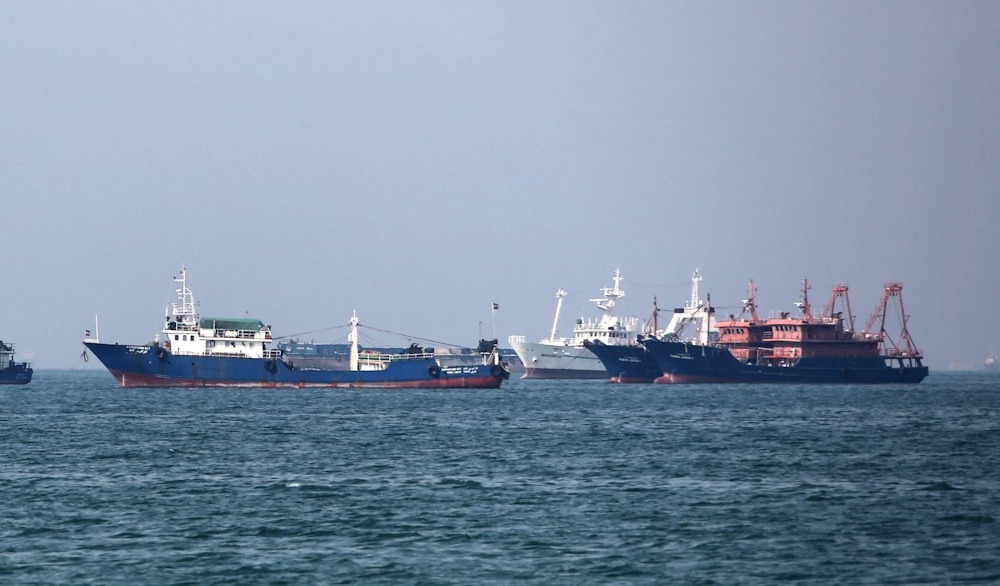
Industry experts assert that shipping activity through the Strait of Hormuz is improbable to normalise in the near future. It was indicated that the process would entail synchronised vessel movements, the resumption of oil production, the restoration of damaged infrastructure, and the establishment of agreements concerning de-mining operations. Several shipowners continue to exhibit hesitance in resuming operations within the Strait of Hormuz and the broader Persian Gulf. Analysts noted that global oil inventories experienced a decline during the extended disruption to shipping through the strait, indicating that recovery will require a significant amount of time. Stockpiles are anticipated to remain constrained until supplementary crude supplies from the Gulf commence their arrival in international markets.