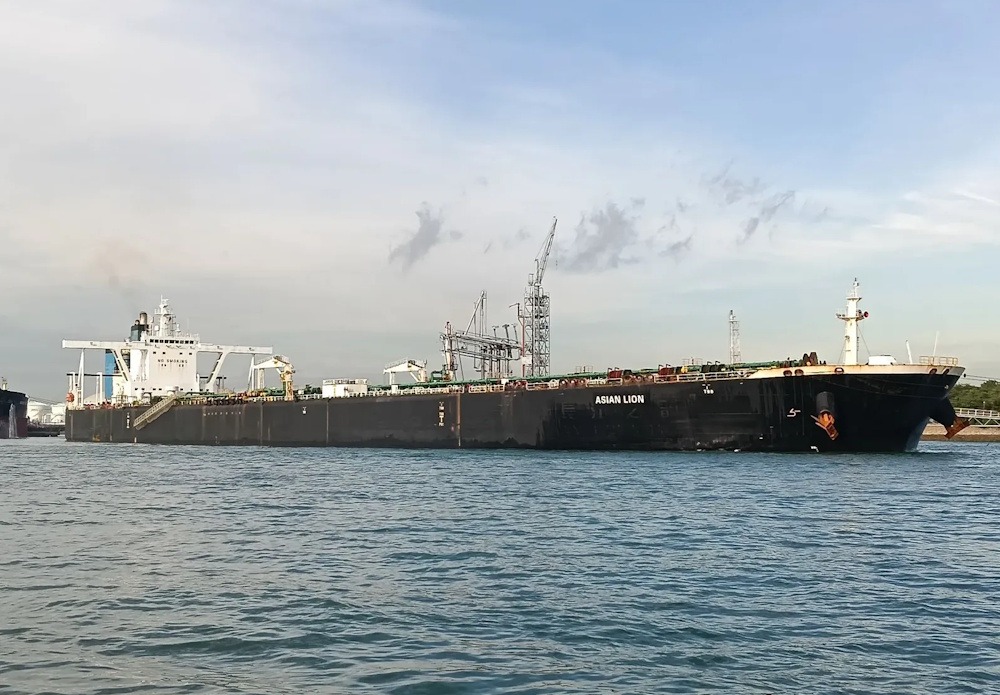
Oil prices declined by over $1 on Thursday following revisions by major forecasters to their projections for global oil demand in 2026, attributing the changes to disruptions stemming from the U.S.-Israeli conflict involving Iran. However, supply concerns stemming from the conflict persisted in offering some support to prices. Brent futures experienced a decline of $1.29, representing a 1.5% decrease, settling at $87.69 per barrel. U.S. West Texas Intermediate crude declined by $1.20, representing a decrease of 1.2%, settling at $82. The Organization of Petroleum Exporting Countries has revised its projection for global oil demand growth in 2026, now estimating an increase of 580,000 barrels per day, as detailed in its monthly oil market report published on Wednesday. The International Energy Agency also revised its outlook on Wednesday, indicating that it now anticipates a contraction in oil consumption of 1.6 million barrels per day this year, in contrast to its earlier forecast of a 1 million bpd decline.
The agency attributed the sharper contraction to restricted fuel supplies and elevated prices stemming from the U.S.-Israeli conflict with Iran, which has negatively impacted demand. Oil prices faced downward pressure following an unexpected rise in U.S. commercial crude inventories. The Energy Information Administration reported on Wednesday that inventories experienced their largest weekly increase since January 2023 last week, coinciding with a decline in exports. Despite the decline in prices, stalled negotiations between Iran and the U.S. to resolve the conflict in the Gulf have maintained a high market level. US President Donald Trump stated that the US had “total control” over the strait, as discussions between Washington and Tehran seemed to be at an impasse, with both parties becoming increasingly entrenched in their positions. The US continued its blockade of Iranian ports as part of a broader strategy to intensify economic pressure on the nation. Pakistan, having acted as a mediator between the two nations, indicated that the wider peace process has encountered a standstill.
However, it noted that the timeline for a US-Iran memorandum of understanding may still be subject to extension, as reported. The risks to regional crude supplies remain apparent following the attacks on shipping in the Strait of Hormuz and the Bab el-Mandeb Strait on Tuesday. Both serve as essential channels for the export of oil and gas from the Middle East. The UAE’s ADNOC reported on Friday that 15 of its vessels have been subjected to attacks while transiting the Strait of Hormuz since the onset of the conflict. The dynamics surrounding both Hormuz and Bab el-Mandeb continue to represent a significant risk for oil markets. Even temporary restrictions, or the threat of further attacks, are increasing insurance costs and encouraging ships to adopt longer routes. This is anticipated to maintain pressure on energy flows in the near term. The duration of the disruption will be pivotal for the outlook on crude prices. JPMorgan estimates that each additional month of disruption could elevate Brent prices by approximately $7 to $8 per barrel.
If the disruption persists for three months, the bank anticipates that average monthly Brent prices will approach approximately $114 per barrel. Goldman Sachs has similarly cautioned that Brent may ascend to $120 a barrel should shipping disruptions persist thru the Strait of Hormuz, the preeminent oil transit route globally. Goldman Sachs anticipates that tensions in the Middle East will ultimately subside in its base case scenario. It projects Brent to average $80 per barrel in the fourth quarter and $75 per barrel in the following year. At the same time, it indicated that risks remain skewed to the upside, as disruptions thru Hormuz and the Red Sea could persist longer than anticipated. “The direction of our outlook is unchanged; the path and the timeline have shifted. We still expect oil to cool as we move into 2027, for three reasons: supply outside the conflict zone is expanding, with OPEC+ raising production targets, the UAE at record output and non-OPEC barrels responding to price,” said Anindya Banerjee.