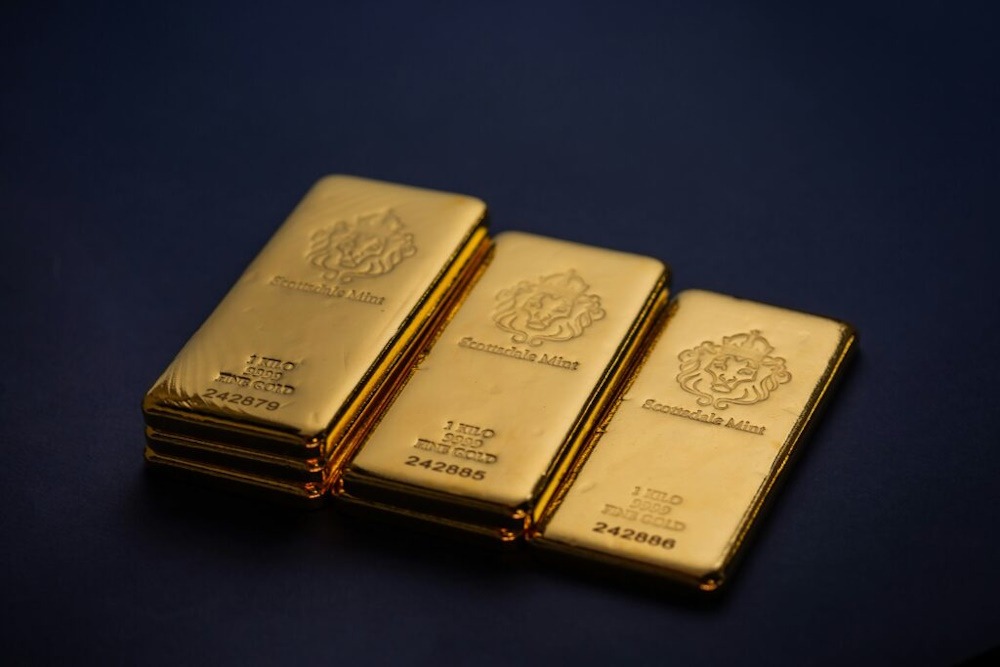
Gold experienced a 2% increase on Monday following announcements from U.S. and Iran officials regarding a preliminary agreement to resolve their conflict. This development contributed to a decline in oil prices and alleviated worries surrounding inflation and rising interest rates. Spot gold increased by 2% to $4,304.11 per ounce, as of 0122, reaching its highest level since June 9. U.S. gold futures for August delivery increased by 2% to $4,325.20.
U.S. and Iranian officials announced on Sunday that they have reached an agreement on a framework aimed at concluding their conflict, lifting the U.S. blockade on Iran, and reopening the Strait of Hormuz. The agreement is set to be formally signed on Friday in Switzerland, as stated by Pakistani Prime Minister Shehbaz Sharif in a post on X. The U.S. dollar has declined to a 10-day low, resulting in lower prices for bullion priced in greenbacks for holders of other currencies, while oil prices have decreased by over 4%. “Lower oil prices and a softer dollar, stemming from reduced geopolitical risk and the anticipated reopening of the Strait of Hormuz, are helping to calm inflation expectations,” said Tim Waterer.
“This combination is providing the precious metal with its best tailwind in recent weeks, though sustainability will depend on how durable the peace agreement proves to be.” Gold prices have decreased approximately 20% since the onset of the U.S.-Israeli conflict with Iran in late February. The effective closure of the Strait of Hormuz has resulted in a significant rise in global oil prices, intensifying inflation concerns and elevating expectations for prolonged higher interest rates. Though traditionally viewed as a safeguard against inflation, gold diminishes in attractiveness within a high interest-rate context due to the rising opportunity cost associated with maintaining the non-yielding asset.
Markets have adjusted their projections for a U.S. interest rate increase in December to 47% following the peace deal, a decrease from 69% the previous week, as indicated by the CME FedWatch tool. “Currency debasement concerns, fiscal risks and ongoing geopolitical fragmentation continue to underpin long-term demand (for gold). A moderation in energy-led inflation could help these themes regain traction,” OCBC said in a note. Spot silver rose 3.1% to $70.07 per ounce, platinum gained 3.1% to $1,771.27 and palladium climbed 3.3% to $1,325.76.