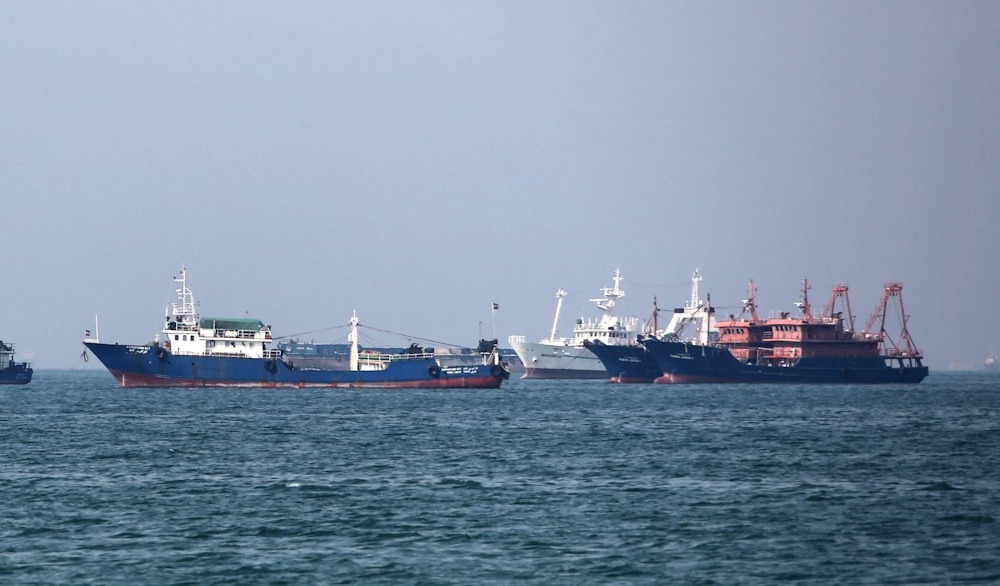
Oil prices increased on Monday as market uncertainty regarding the reopening of the Strait of Hormuz reemerged. Iran announced that a deal with Oman to establish new shipping lanes is nearing completion; however, it emphasised that the United States must fulfilll further conditions prior to the reopening of the waterway. Brent crude futures increased by $1.12, representing a 1.5% rise, reaching $84.7 per barrel. US West Texas Intermediate crude futures increased by 94 cents, representing a rise of 1.07%, reaching a price of $79 per barrel. Both benchmarks experienced a decline exceeding 7% last week, driven by anticipations that Iran and Oman were approaching a consensus that might facilitate the reopening of the Strait of Hormuz, a critical passageway for the transportation of one-fifth of the world’s oil prior to the conflict.
Iran announced on Sunday that its agreement with Oman is nearing completion, while also emphasising that the waterway’s reopening is contingent upon Washington fulfilling additional requirements, which include compensating Iran for extensive US assaults. Iranian Foreign Minister Abbas Araqchi stated on Sunday that there were no ongoing discussions between Tehran and Washington, emphasising that Iran would refrain from entering negotiations as long as the United States persisted in violating an interim agreement established in June. Supply concerns were further exacerbated following an attack on a Saudi oil facility over the weekend. The Iran-aligned Houthis announced that they had targeted Saudi Aramco’s Jazan refinery on Sunday, following Saudi Arabia’s signing of a defence pact with Turkey and Pakistan just two days prior. This move comes in light of increasing regional instability linked to the US-Israeli conflict with Iran.
The UAE’s ADNOC reported on Friday that 15 of its vessels have been targeted while navigating the Strait of Hormuz since the onset of the conflict. The duration of the supply disruption will be a critical determinant in forecasting the trajectory of oil prices moving forward. JPMorgan posits that each supplementary month of disruption may contribute approximately $7 to $8 per barrel to Brent prices. If the disruption persists for three months, the bank anticipates that average monthly Brent prices will approximate $114 per barrel. Goldman Sachs has similarly cautioned that Brent may escalate to $120 a barrel if shipping disruptions thru the Strait of Hormuz, the preeminent oil transit route globally, persist.
Its base case, however, remains that tensions in the Middle East will ultimately subside. In that scenario, Goldman anticipates Brent to average $80 a barrel in the fourth quarter and $75 a barrel in the following year. It also cautioned that risks remain skewed to the upside owing to the potential for extended disruptions in the Strait of Hormuz and the Red Sea. “The direction of our outlook is unchanged; the path and the timeline have shifted. We still expect oil to cool as we move into 2027, for three reasons: supply outside the conflict zone is expanding, with OPEC+ raising production targets, the UAE at record output and non-OPEC barrels responding to price,” said Anindya Banerjee.