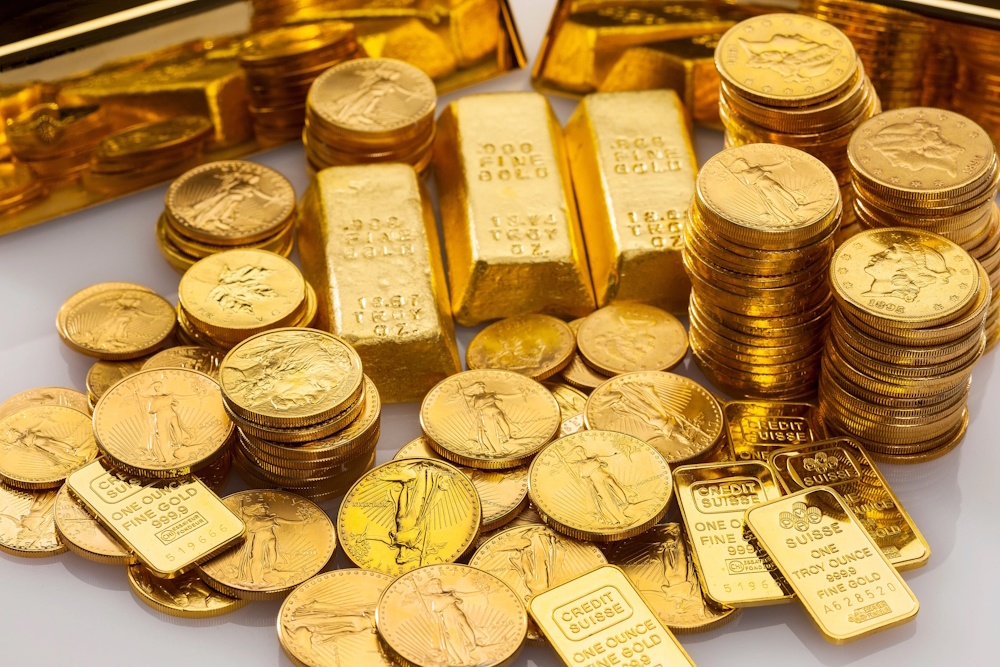
Gold remained stable on Tuesday as the dollar declined and crude oil prices decreased following U.S. President Donald Trump’s decision to halt a planned military action against Iran, alleviating worries about inflation and sustaining elevated interest rates. Spot gold held steady at $4,565.40 per ounce, as of 0103, after experiencing a decline to its lowest point since March 30 in the previous session. Gold futures in the U.S. for June delivery increased by 0.2%, reaching a price of $4,567.90.
The depreciation of the dollar resulted in a decrease in the price of bullion denominated in dollars for holders of alternative currencies. On Monday, U.S. President Donald Trump announced the cancellation of a scheduled military strike against Iran, aiming to foster negotiations aimed at addressing the U.S.-Israeli conflict, following Iran’s submission of a new peace proposal to Washington. During early trading in Asia, oil prices experienced a decline of over 2%, buoyed by optimism surrounding potential negotiations aimed at resolving the conflict in the Middle East.
Rising crude oil prices can drive inflation, and while gold is regarded as a hedge against inflation, higher interest rates typically exert pressure on the non-yielding metal. Kevin Warsh is set to be sworn in as the chief of the U.S. Federal Reserve on Friday, as confirmed by a White House official on Monday, with President Trump officiating the ceremony. This appointment positions the financier at the forefront of the central bank amid rising inflation, which may complicate the implementation of the interest-rate cuts sought by Trump.
Ghana has requested that large-scale gold miners increase their sales to the central bank to 30% of annual output, up from the previous 20%, according to a senior official. Spot silver experienced a decline of 0.3%, settling at $77.58 per ounce. Platinum saw a reduction of 0.2%, now priced at $1,976.15, while palladium faced a decrease of 0.6%, bringing its value to $1,409.75.