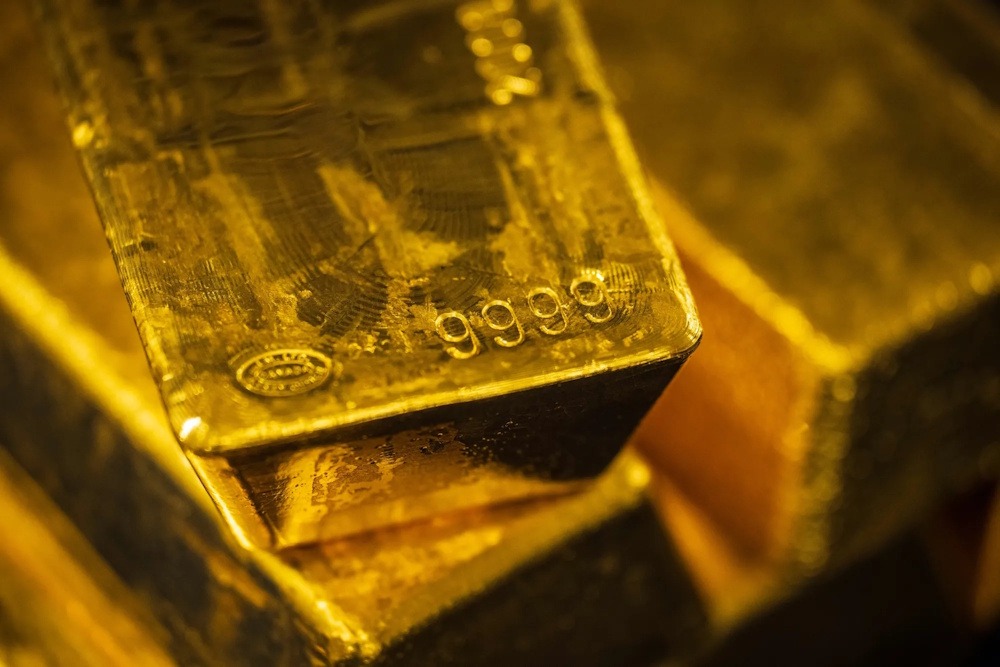
Gold prices increased by over 1% on Wednesday, supported by a declining dollar, as reduced oil prices alleviated inflation concerns in light of optimistic prospects for a peace agreement between the U.S. and Iran. Spot gold increased by 1.3%, reaching $4,617.19 per ounce, as of 0100. Gold futures in the U.S. for June delivery increased by 1.4%, reaching a price of $4,631.30. On Tuesday, U.S. President Donald Trump announced a temporary halt to an operation aimed at assisting vessels in the Strait of Hormuz, referencing advancements in discussions for a comprehensive agreement with Iran.
U.S. Secretary of State Marco Rubio conveyed to reporters on Tuesday that “operation Epic Fury is concluded,” adding that “we’re not cheering for an additional situation to occur.” The U.S. dollar and crude oil prices experienced a decline following Trump’s decision to suspend operations in order to assess the feasibility of finalizing and signing an agreement with Iran. Meanwhile, data indicated that the U.S. trade deficit expanded in March, driven by a surge in imports associated with a significant investment boom, which more than counterbalanced a rise in exports, partially supported by petroleum shipments in the context of the Middle East conflict.
The forthcoming U.S. employment report will serve as a crucial gauge of the economy’s robustness, determining whether the Federal Reserve can maintain its existing monetary policy or if a declining labor market might reignite conversations regarding interest rate reductions, which have been predominantly eclipsed by the situation in Iran. The SPDR Gold Trust, recognized as the foremost gold-backed exchange-traded fund globally, reported that its holdings were stable at 1,040.66 metric tons as of Monday. Spot silver experienced an increase of 2.4%, reaching $74.60 per ounce, while platinum saw a rise of 1.3%, now priced at $1,977.25. Additionally, palladium recorded a gain of 1.1%, bringing its value to $1,502.