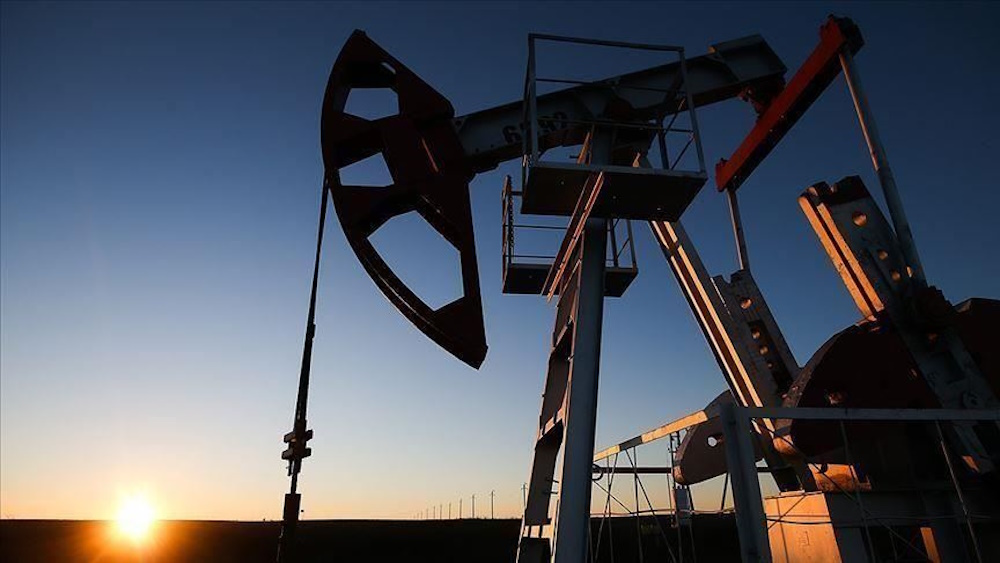
Oil prices experienced a notable increase of approximately 3% on Wednesday evening, prompted by new sanctions imposed by the Trump administration targeting Russia’s two largest crude companies. The sanctions were justified by the administration’s assertion of Moscow’s insufficient commitment to a peace process aimed at resolving the ongoing conflict in Ukraine. By 8:18 p.m., Brent crude increased by $1.83, reflecting a rise of 2.92%, reaching a price of $64.42 per barrel, whereas U.S. crude saw an uptick of $1.74, or 2.97%, bringing it to $60.24 per barrel. Earlier in regular trading, Brent experienced an increase of 2% to conclude at $62.59 per barrel, while U.S. crude saw a rise of 2.2% to settle at $58.50 per barrel. The U.S. expressed its readiness to pursue additional measures while urging Moscow to promptly consent to a ceasefire in the ongoing conflict in Ukraine. Throughout the duration of his second term, President Donald Trump has maintained his stance against the mounting pressure from U.S. lawmakers to implement energy sanctions, with the expectation that Russia would consent to cease hostilities. However, with no resolution apparent, he expressed that he believed it was time. Last week, Britain imposed sanctions on Rosneft and Lukoil. In a distinct development, EU nations have ratified a 19th package of sanctions targeting Russia in relation to the ongoing conflict, which encompasses a prohibition on the importation of Russian LNG.
“President Trump’s fresh sanctions hitting Russia’s biggest oil houses aim squarely at choking Kremlin war revenues—a move that could tighten physical flows of Russian barrels and force buyers to re-route volumes onto the open market,” stated Priyanka Sachdeva. “Should New Delhi reduce its purchases due to U.S. pressure, we may observe a shift in Asian demand towards U.S. crude, which could elevate Atlantic prices,” she noted. Indian state refiners indicated that they are reassessing their acquisitions of Russian oil barrels to guarantee that no supply will be sourced directly from Rosneft and Lukoil following the imposition of U.S. sanctions on these entities. Immediately following the announcement of U.S. sanctions, Brent and WTI futures experienced an increase of over $2 per barrel, further supported by an unexpected drop in U.S. stockpiles.
However, market skepticism regarding the potential impact of U.S. sanctions on a fundamental shift in supply constrained the gains in oil prices. “The new sanctions are certainly escalating tensions between the US and Russia, but I perceive the increase in oil prices more as a reflexive response from the markets rather than indicative of a fundamental change,” stated Claudio Galimberti. “So far, almost all the sanctions against Russia for the past 3.5 years have mostly failed to dent either the volumes produced by the country or the oil revenues,” he said, adding that some buyers of Russian oil in India and China have been continuing their purchases.
In the short term, market participants were focusing on a surplus in OPEC+ supplies, attributed to the unwinding of production cuts, as a significant factor influencing prices. “The three factors I will be monitoring as we approach November are the unwinding of OPEC+, China’s accumulation of crude stocks, and the conflicts in Ukraine and the Middle East, in that sequence,” stated Rystad’s Galimberti.