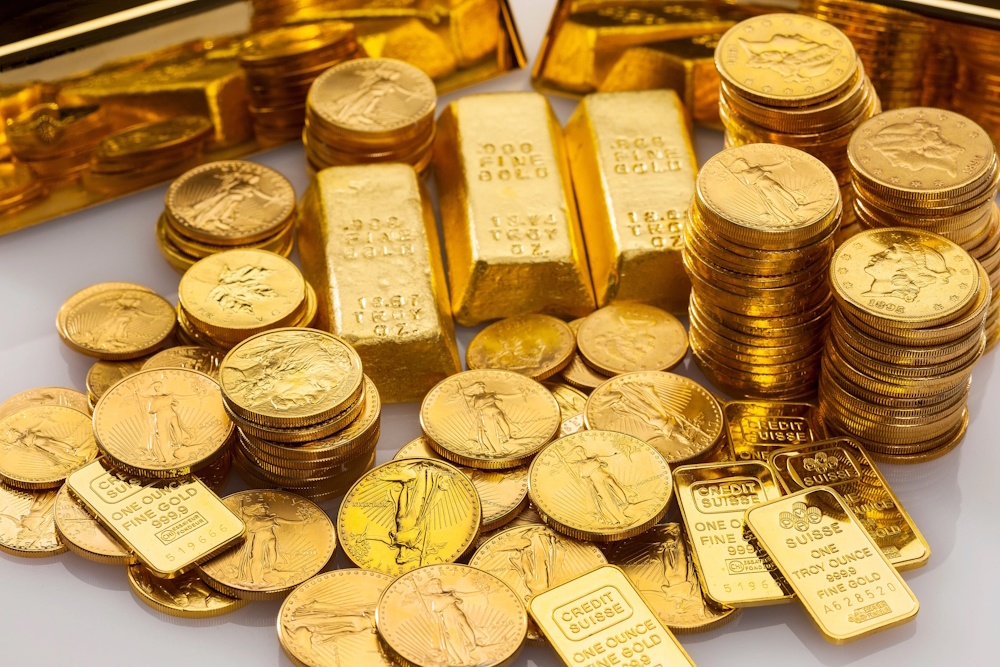
Gold prices remained unchanged on Friday and are poised to record a weekly decline as the dollar edged upward following U.S. President Donald Trump’s imposition of new tariff rates on numerous countries. Meanwhile, investors are anticipating the release of U.S. non-farm payrolls data later in the day. Spot gold held steady at $3,289.79 per ounce. Bullion has experienced a decline of 1.4% thus far this week.
U.S. gold futures declined by 0.3%, settling at $3,340.20. The dollar index experienced a 0.1% increase, approaching a two-month high reached on Thursday, thereby rendering gold more costly for holders of other currencies. * On Thursday, Trump enacted an executive order that establishes “reciprocal” tariffs, which will range from 10% to 41% on imports from a variety of countries and foreign regions.
The duties on Canadian goods were raised to 35% from 25% for all products not included in the U.S.-Mexico-Canada trade agreement, while Mexico was granted a 90-day reprieve to negotiate a more comprehensive deal. Asian shares experienced a decline on Friday following the imposition of significant tariffs by the U.S. on numerous trading partners.
The attention now turns to the U.S. jobs data set to be released later today, which may provide further insights into the Federal Reserve’s trajectory regarding rate cuts, following the bank’s decision to maintain rates earlier this week. Fed funds futures indicate a mere 39% probability of a rate cut in September, a significant decline from the 65% likelihood observed prior to the Fed meeting, as reported by the CME’s FedWatch. Gold performs well in a low-interest rate environment due to its nature as a non-yielding asset.
SPDR Gold Trust, the largest gold-backed exchange-traded fund globally, reported a decline in its holdings of 0.09%, decreasing to 954.51 tonnes on Thursday from 955.37 tonnes on Wednesday. Spot silver remained unchanged at $37.10 per ounce, while platinum experienced a decline of 0.3% to $1,308.85, and palladium saw an increase of 0.9% to $1,216.25.