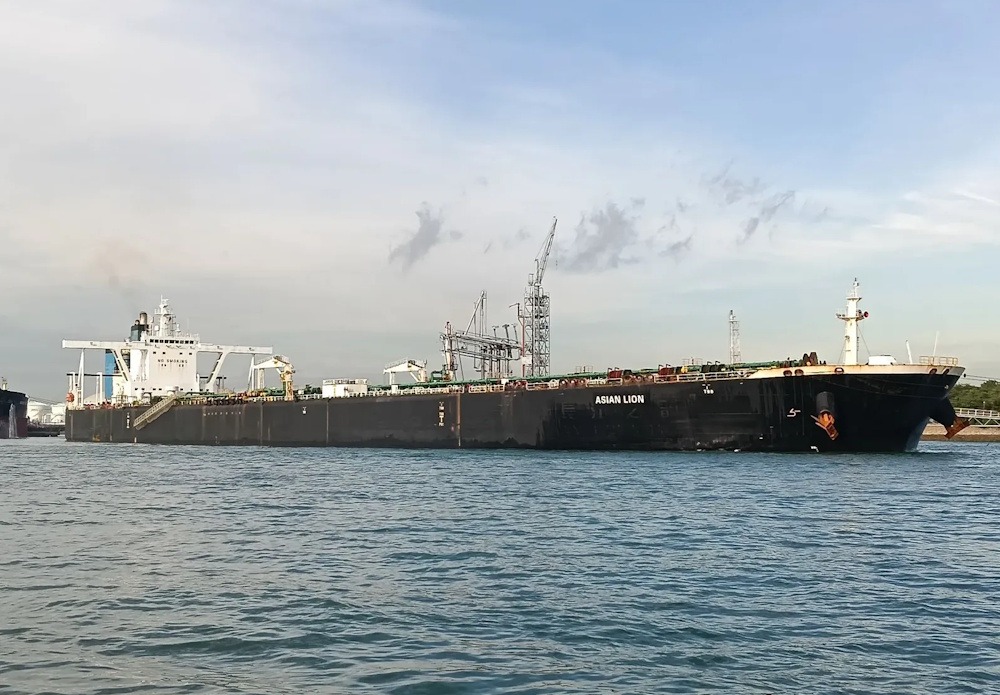
Oil prices increased by over $2 a barrel on Monday following the United States’ military action against an Iranian island in the Strait of Hormuz, which elicited a response from Tehran as the conflict in the Middle East reached its sixth month. U.S. forces on Sunday targeted two launchers located on Iran’s Larak island in the Strait of Hormuz. It marked the inaugural American strike on the Gulf nation since late July. Iran has retaliated by launching attacks on two U.S. air bases located in Jordan, as reported by source on Monday, referencing statements from Iran’s Revolutionary Guards. Brent crude futures increased by $2.11, representing a rise of 2.40%, reaching a price of $90.20 per barrel. U.S. West Texas Intermediate crude stood at $85.30 a barrel, reflecting an increase of $1.89, or 2.27%.
Efforts to resolve the conflict remain at an impasse, as mediators strive to reinstate traffic through the Strait of Hormuz. Prior to the onset of hostilities in late February, the waterway was responsible for transporting one-fifth of global oil flows. Increased oil movement through the Strait of Hormuz has alleviated worries regarding potential supply disruptions, yet a comprehensive agreement to completely reopen the passage continues to be out of reach. A report by Reuters indicates that shipping data revealed a decline in the number of visible commodity vessels transiting the strait over the weekend, dropping to five per day. This trend underscores the apprehension among companies regarding potential attacks on ships. The United Kingdom Maritime Trade Operations reported on Sunday that a tanker was struck by a projectile while navigating inbound through the strait on Saturday.
Goldman Sachs estimated on Thursday that total Gulf oil exports had recently recovered to a range of 15 million to 16 million barrels per day. However, that remained 7 million to 8 million bpd below pre-war levels, although it was 5 million to 6 million bpd higher than the lowest level recorded in March. For crude markets, the duration of the disruption will continue to be a pivotal factor. JPMorgan posits that every extra month of disruption may contribute approximately $7 to $8 per barrel to Brent prices. If the disruption persists for three months, the bank anticipates average monthly Brent prices to approximate $114 per barrel. Goldman Sachs has issued a cautionary note indicating that Brent may rise to $120 a barrel should shipping disruptions through the Strait of Hormuz, the preeminent oil transit corridor globally, continue. Its base case, however, posits that tensions in the Middle East will ultimately subside.
The bank anticipates that Brent will average $80 a barrel in the fourth quarter and $75 a barrel in the following year, while cautioning that the risks are tilted toward the upside should disruptions in the Strait of Hormuz and the Red Sea persist longer than expected. Ponmudi R stated that crude prices would persist in following developments surrounding the Strait of Hormuz closely. He stated that a sustained recovery in shipping flows could further reduce the geopolitical premium in crude and provide relief to emerging-market equities, while new disruptions could swiftly reverse that trend.