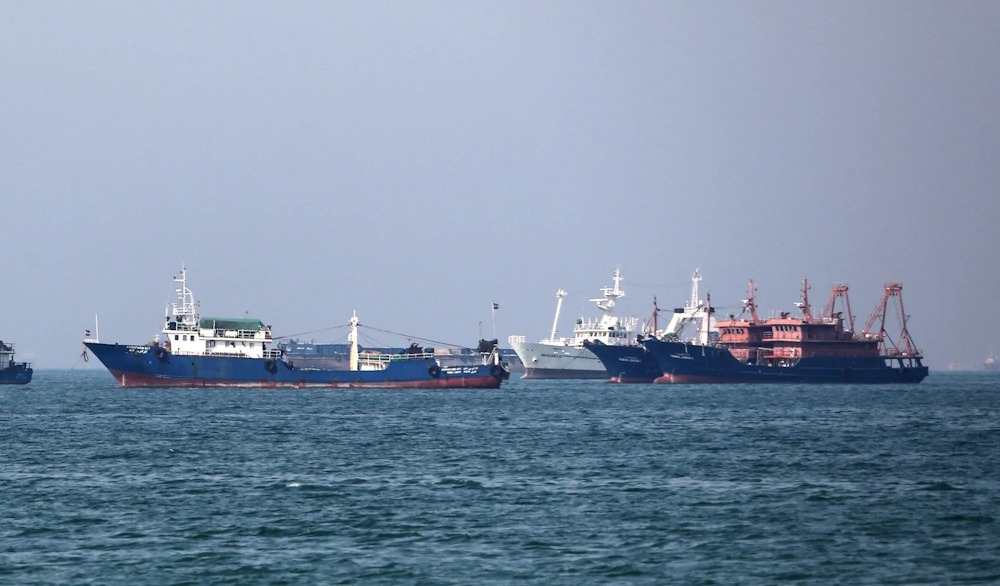
Oil prices experienced an uptick on Wednesday following an assault on a Saudi Arabian refinery, which reignited apprehensions regarding potential supply disruptions in the Middle East, particularly in light of the ongoing conflict involving Iran and its affiliates. Saudi Arabia holds the position as the largest exporter of crude oil globally. Yemen’s Iran-aligned Houthis announced on Tuesday that they had targeted Saudi Arabia’s largest oil refinery with a missile, marking a significant escalation in their attacks against the world’s second-largest crude producer. Saudi authorities had not promptly verified the attack on the facility, which possesses a capacity of 550,000 barrels per day. Brent crude futures increased by $1.60, representing a rise of 1.50%, reaching $115.63 per barrel. Meanwhile, US West Texas Intermediate crude saw an uptick of $1.22, or 1.22%, bringing it to $101.12. The gains followed a nearly $2 decline in oil prices on Tuesday, as discussions in the Middle East alleviated worries regarding potential supply disruptions.
OPEC+ oil producers are anticipated to uphold their December output targets during the meeting on Sunday, according to three individuals familiar with the situation, aligning with prevailing market expectations. Production among the seven core members of the group-Saudi Arabia, Russia, Iraq, Kuwait, Algeria, Kazakhstan, and Oman-continues to fall short of their designated output targets. Attacks on Saudi Arabia persisted over the weekend, as the Houthis asserted that they had aimed at an airport and oil facilities on Saturday. Saudi Arabia announced on Sunday that it had successfully intercepted additional missiles and drones. The world’s largest oil exporter has partially resumed operations at its main airport on Sunday, following damage inflicted by a previous series of Houthi attacks. This comes despite the group’s commitment to persist in targeting the facility. Last week, Saudi Aramco initiated the evacuation of its headquarters located in Dhahran, adjacent to the Gulf coast and Bahrain, according to a report. Hostilities between Saudi Arabia and the Yemen-based Houthis have escalated significantly. The Houthis have asserted responsibility for attacks on the East-West oil pumping stations; however, Saudi Arabia has yet to verify these claims.
Meanwhile, an oil spill from a tanker has been identified off the coast of Umm Al Quwain in the United Arab Emirates, according to the country’s Ministry of Climate Change and Environment. The ministry has refrained from disclosing the cause of the spill, and authorities have yet to ascertain the identity of the vessel involved. Clashes between the Houthis and a Saudi-led coalition backing Yemen’s internationally recognised government have persisted since the Iran-aligned group made advances toward the Bab el-Mandeb Strait last month. The strait serves as a critical shipping chokepoint at the entrance to the Red Sea. The unpredictable trajectory of the conflict persists in obscuring the forecast for oil prices. JPMorgan analysts indicated that it continues to be challenging to evaluate the progression of the war. At the onset of the conflict, the bank anticipated that the US administration would refrain from surpassing specific economic thresholds. Seven months later, numerous thresholds had been surpassed, yet a definitive exit strategy continued to be unattainable. The risk of further supply disruptions has bolstered expectations of elevated oil prices. Daan Struyven stated that recent attacks have highlighted the potential for shipping disruptions to proliferate and escalate.
Goldman Sachs has delineated a scenario wherein oil prices might ascend to $120 per barrel should assaults on vessels in the Middle East intensify. Conversely, prices may decline to approximately $80 a barrel should exports revert to typical levels. Struyven noted that shipping risks have emerged as a crucial factor influencing oil prices, further indicating that the bank perceives considerable upside potential for crude. Goldman Sachs anticipates an upward trend in natural gas and refined fuel prices, noting that supply shocks are likely to exert a more significant influence on gas and refined products compared to crude oil. Meanwhile, Russian refiners are ramping up diesel production in October, as the government has allocated export quotas subsequent to the Kremlin’s supply agreement with the US, according to industry sources.