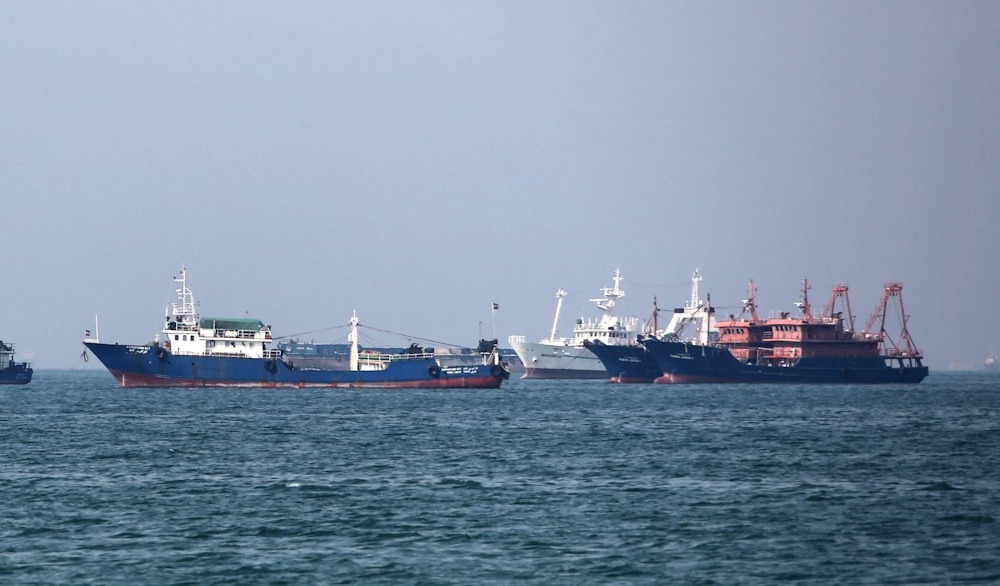
Oil prices continued to rise for a fourth straight session on Thursday, driven by new U.S. strikes on Iranian military targets that intensified worries about a potential escalation in the conflict and the associated risk of supply disruptions in the Strait of Hormuz. The United States on Wednesday targeted Iran’s coastal defence systems and missile sites following the reimposition of a naval blockade on Iranian ports. In response, Iran cautioned that it might impose additional limitations on regional energy exports, asserting that it was engaged in a “existential war” against the U.S. Crude futures increased by 33 cents, representing a 0.4% rise, reaching $85.28 per barrel. U.S. West Texas Intermediate crude increased by 42 cents, or 0.5%, reaching $80.02 per barrel. Both benchmarks experienced an increase of approximately 0.3% on Wednesday, maintaining proximity to the one-month highs reached earlier in the week.
Crude prices have risen this week as the ongoing conflict has further disrupted supplies through the Strait of Hormuz, a critical passage that accounted for approximately one-fifth of global oil and liquefied natural gas trade prior to the onset of hostilities. Hostilities between Iran and the U.S. resumed last week, undermining the fragile truce reached in June after several months of fighting. Analysts noted that Iran has signalled its potential to leverage its Houthi allies in Yemen to obstruct the Bab el-Mandeb Strait, which could introduce an additional front in the ongoing conflict and pose a threat to two of the globe’s most critical energy shipping routes. Goldman Sachs indicated that Brent crude might exceed $110 per barrel in the fourth quarter should the recovery in Gulf exports continue to be postponed. However, it anticipates that prices will decline into the $60s by year-end, contingent upon a reduction in geopolitical tensions and a more rapid recovery in production than previously expected.
“At the current point there are no signs of a ceasefire again. But in case there is a ceasefire immediately imposed, we don’t expect Brent oil prices to fall beyond $70 per barrel. It is likely to remain the lower support for the near term,” Pranav Mer told. He noted that the resumption of normal supply through the Strait of Hormuz appears improbable in the near term, as both Iran and the U.S. assert their control over the passage. He suggests that the conflict is poised to escalate, thereby complicating the navigation of vessels in the area. If we look at the price outlook for the near term, we see Brent trading between 70 and 95,” he said. Mer also holds the view that oil prices possess additional potential for increase. He anticipates Brent will trend towards $92-$95 per barrel, with the rate of increase contingent upon the developments in the conflict. Any further escalation, he stated, could drive prices above $100 per barrel in the near term.
Anindya Banerjee informed that the market is reacting less to the military action itself and more to the diminishing prospects of diplomacy. He observed that Tehran has established new prerequisites for resuming negotiations, and each subsequent development is prolonging the disruption of standard tanker movement through the Strait of Hormuz, where traffic has consistently remained significantly lower than pre-war levels. According to Banerjee, the renewed uncertainty has reinstated the geopolitical risk premium in crude oil prices, with Brent currently approaching the upper limit of Kotak Securities’ base-case range of $70-$80 per barrel. If the conflict persists and shipping disruptions deepen, he anticipates prices to rise to $85-$90 per barrel. Nuvama Institutional Equities has issued a warning that an extended closure of the Strait of Hormuz could significantly impact the flow of nearly 20 million barrels per day of crude oil. In this context, oil prices may escalate to a range of $110 to $150 per barrel.