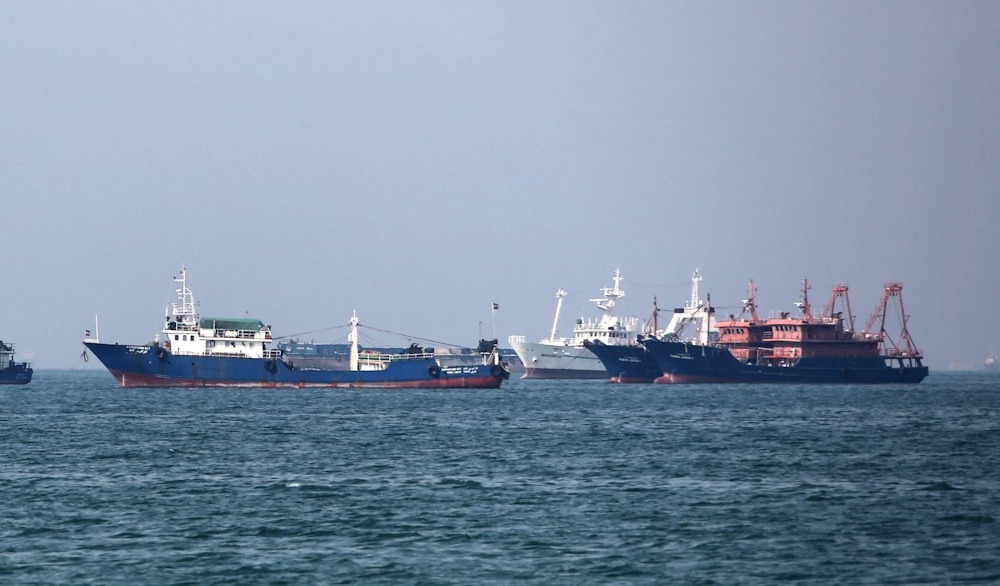
Oil prices experienced a decline on Friday morning, indicating a trajectory towards significant weekly losses. This shift is attributed to alleviating supply concerns, particularly as additional stranded oil tankers have departed from the Strait of Hormuz, despite an incident involving a cargo vessel near Oman on Thursday. Brent crude futures decreased by 19 cents, or 0.25%, settling at $75.07 a barrel as of 0055, whereas U.S. West Texas Intermediate dropped 13 cents, or 0.18%, to $71.79 a barrel. Both benchmark contracts experienced an increase of over 2% on Thursday following an incident where a cargo vessel was struck by an unidentified projectile near Oman.
This event led the U.N.’s shipping agency to halt its voluntary evacuation scheme. Two U.S. officials informed Reuters that Iran targeted the cargo ship while it was trying to navigate through the strait. Iranian authorities stated that the safety of vessels navigating outside the specified routes in Hormuz is not assured. “With the geopolitical risk premium once again creeping back into prices, markets will be watching intently to see if tanker traffic resumes or if these latest hurdles force producers to tap the brakes on planned production increases,” said analyst Tony Sycamore.
Brent and WTI crude are both poised to experience declines nearing 7% this week. Data released on Thursday indicated that crude shipments via the Strait of Hormuz increased this week, reaching their peak since the onset of the U.S.-Israeli conflict with Iran in February. The reopening of the waterway following a ceasefire agreement, coupled with apprehensions regarding the duration of its accessibility, further stimulated trade. However, overall traffic remains a fraction of the daily average of 125 ships passing through the strait before the February 28 conflict began. Meanwhile, the earthquakes in Venezuela that occurred on Thursday have also heightened concerns regarding supply.
Initial evaluations conducted by personnel within Venezuela’s extensive oil, gas, and refining sectors indicate minimal damage. This is primarily due to the fact that the majority of the nation’s key production zones, refineries, pipelines, and terminals are situated at a considerable distance from the areas most severely affected. Nonetheless, insufficient power has raised concerns regarding the ability to maintain oil production at its pre-earthquake level of nearly 1.2 million barrels per day, according to sources.