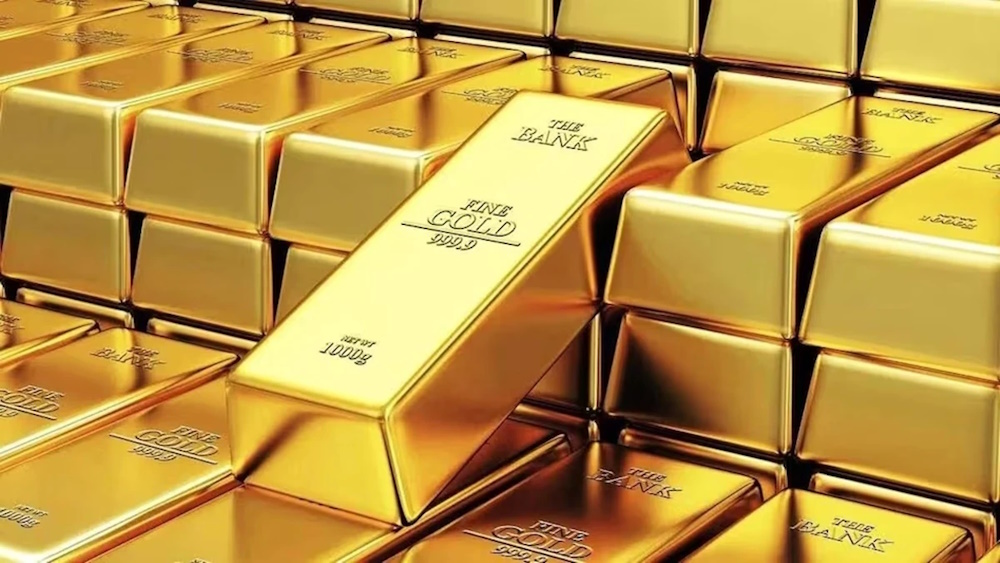
On Thursday, gold prices experienced an uptick, supported by a declining dollar, as market participants concentrated on the discussions between U.S. President Donald Trump and Chinese President Xi Jinping. Spot gold increased by 0.3% to $4,699.87 per ounce as of 0045. Gold futures in the U.S. for June delivery remained unchanged at $4,706.90. Trump engages in a series of discussions with Xi in Beijing, aiming for economic benefits, maintaining a fragile trade agreement, and addressing complex issues such as the Iran conflict.
The depreciation of the dollar has rendered gold, denominated in dollars, more accessible to holders of alternative currencies. The US Dollar experienced a notable surge in U.S. producer prices in April, marking the most significant rise in four years. This increase was driven by escalating costs for goods and services, underscoring a recent indication of rising inflation in the context of the ongoing Middle East conflict. The U.S. Senate has confirmed Kevin Warsh as chair of the Federal Reserve, amid increasing inflationary pressures that could hinder the implementation of the interest-rate cuts sought by Trump.
Boston Fed President Susan Collins conveyed to the Wall Street Journal her anticipation that inflationary pressures stemming from the Iran war will ultimately diminish, highlighting that the present shock has obscured indications that core inflation continues to trend downward. On Wednesday, gold discounts in India reached an unprecedented level, exceeding $200 an ounce.
The increase in prices, prompted by heightened import duties, resulted in investor sell-offs in a market that was already characterized by weak demand, as reported by bullion dealers. Spot silver decreased by 0.4% to $87.64 per ounce, while platinum increased by 0.7% to $2,151.38, and palladium rose by 0.4% to $1,506.19.