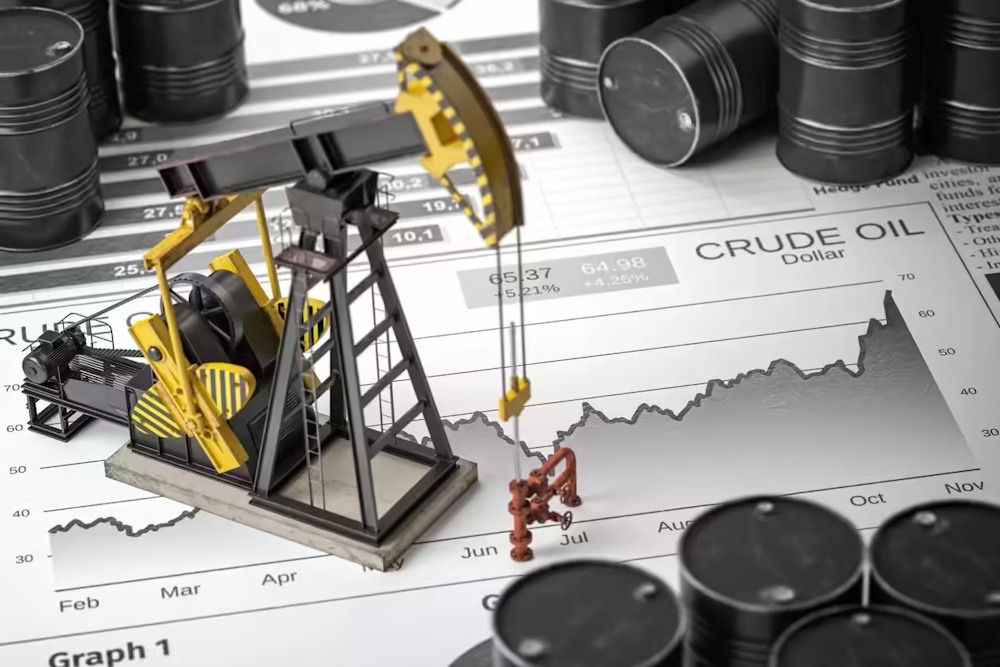
Oil prices increased during early Asian trading on Tuesday, as the negotiations aimed at resolving the conflict between the United States and Iran seemed tenuous. Tehran’s reaction to a U.S. proposal underscored significant disparities, sustaining apprehensions regarding supply. Brent crude futures increased by 30 cents, or 0.29%, reaching $104.51 per barrel, whereas U.S. West Texas Intermediate rose by 31 cents, or 0.32%, to $98.38 as of 0002. Both benchmarks experienced an increase of nearly 2.8% on Monday. U.S. President Donald Trump remarked on Monday that the ceasefire with Iran was “on life support,” highlighting disputes regarding various demands, including the cessation of hostilities across all fronts, the lifting of a U.S. naval blockade, the reinstatement of Iranian oil sales, and compensation for war damages.
Tehran has reiterated its claim to sovereignty over the Strait of Hormuz, a critical passageway that facilitates approximately one-fifth of the world’s oil and liquefied natural gas shipments. “As long as the US-Iran negotiations remain inconclusive and physical flows through the Strait of Hormuz stay restricted, we should see prices holding above $100,” stated Tim Waterer. A genuine breakthrough toward a peace deal could trigger a sharp correction in the range of $8-12, while any escalation or renewed blockade threats would swiftly push Brent back toward levels exceeding $115, he stated. Disruptions associated with the near-closure of the strait have led producers to reduce exports, as a survey on Monday indicated that OPEC oil output in April declined to its lowest level in more than twenty years.
Saudi Aramco CEO Amin Nasser cautioned on Monday that interruptions to oil exports via the strait could postpone a return to market stability until 2027, resulting in a loss of approximately 100 million barrels of oil per week. In a recent development, the Trump administration revealed on Monday its intention to loan 53.3 million barrels of crude from the U.S. Strategic Petroleum Reserve as a measure to stabilize the oil market. Ship-tracking data indicated that a shipment of crude from the U.S. SPR is on its way to Turkey, representing the inaugural delivery to the Mediterranean nation.
Simultaneously, mere days before Trump’s scheduled meeting with Chinese President Xi Jinping, Washington enacted sanctions on three individuals and nine companies, which encompass firms located in Hong Kong, the United Arab Emirates, and Oman, for their role in facilitating Iranian oil shipments to China. In a separate development, as reported on Monday that the UAE executed military strikes against Iran, which included an early April assault on a refinery located on Iran’s Lavan Island. The report indicated that the UAE has not made any public acknowledgment of the strikes.